
DTH Travel: Active Holidays at Every Level
01-Oct-2026
Category: News Stories
When we hear active holiday, we tend to picture the same things: hiking boots, bicycles, climbing ropes and perhaps the occasional activity designed to make us question our life choices. And there’s nothing wrong with that.
But we think “active” has become a little too closely associated with being sporty. What if being active simply meant finding ways to get your adrenaline running?
It could mean getting your heart racing at 233 metres above Macau. It could mean turning a theme park into an interactive game. It could mean climbing Southeast Asia’s highest peak without needing technical climbing skills. Or paddling, hiking and rock climbing through a landscape where the view is part of the reward.
The active holiday doesn’t have to be about how athletic you are. It can be about how you want to experience a destination.
Here are four ways to rethink active travel in Asia.
Malaysia: Democratic Active
Mount Kinabalu looks like the sort of mountain that should require a serious climbing résumé.
It doesn't.
At 4,095.2 metres, Mount Kinabalu is Malaysia's highest mountain, yet Sabah Parks notes that the climb does not require technical climbing skills. Basic fitness and a registered mountain guide are required, and the recommended three-day experience also allows more time to appreciate the mountain's remarkable biodiversity.
That makes it an interesting proposition for travellers who want a real achievement without crossing into technical mountaineering.
And the reward isn't simply reaching the summit. The journey is deliberately slower and easier-paced to appreciate better the changing habitats as one ascends, with rare plants, orchids, birds and other biodiversity along the way.
It looks intimidating on paper. It is surprisingly accessible in practice.
For travel advisors: Don't treat Kinabalu as a standalone mountain challenge. Build it into a wider Borneo journey — give clients time to climb, then follow the mountain with rainforest, wildlife or river experiences. The contrast makes the whole itinerary feel more varied, rather than turning the trip into just days of hiking.
Macau: Classic Adrenaline
For some travellers, active means one very simple thing: jump.
At Macau Tower, that can mean taking on the world’s highest commercial bungy jump from a building, at 233 metres. For those who prefer their adrenaline with slightly less freefall, Skypark Macau Tower also offers experiences including Skywalk and Tower Climb.
The advantage for travel advisors is that this doesn't need to become an entire adventure holiday.
It can be one high-adrenaline chapter in a much broader Hong Kong and Macau journey — seamlessly combined with food, culture, heritage and the city experiences your clients already want.
For travel advisors: Think of Macau as the active punctuation mark in a Hong Kong journey. Add the thrill, then return to the city for the food, culture and slower discoveries.
Japan: Kinetic Geek
Not every active traveller owns hiking boots.
Some own a “Power-Up Band”.
At SUPER NINTENDO WORLD™ at Universal Studios Japan, travellers can turn the theme park into an interactive game, collecting virtual coins, completing challenges and taking on a final showdown with Bowser Jr.
It is active in a completely different sense: you move, interact, compete and play rather than simply queue for an attraction.
And that makes it particularly interesting for families and multigenerational travellers — especially those who may not consider themselves “adventure travellers” at all.
For travel advisors: Put it between the big cultural hits. After temples, gardens and museums, an interactive day at Universal Studios Japan gives younger travellers — and the young at heart — a completely different way to experience Japan. It also works particularly well as a family-friendly reset day in a longer Japan itinerary.
Thailand: The Active's Active
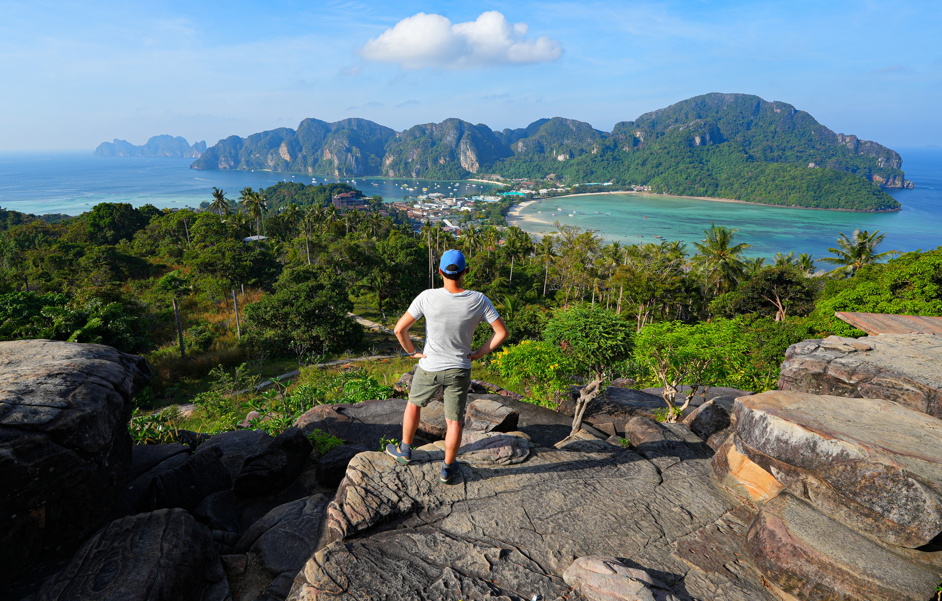
For travellers who really do want to get moving, Krabi doesn't make you choose between the activity and the scenery.
Rock climbing around Railay. Sea kayaking through coastal landscapes. Hiking to viewpoints. Exploring islands, caves and marine environments.
Krabi's limestone cliffs are internationally recognised among rock climbers, while its islands, reefs and national parks create plenty of opportunities to keep moving on land and water.
And then comes the payoff.
Climb a cliff. Paddle around a limestone island. Hike for the viewpoint. Krabi has a habit of making the effort worth it.
For travel advisors: Don't make Krabi the beach stop with an activity tacked on. Give it a few nights and build the days around different ways of moving — climbing one day, kayaking or exploring by water the next, then a hike or viewpoint before some well-earned downtime. The variety is what makes Krabi work as an active stay.
The DTH Difference
Anyone can add an activity. We know how to make it matter to your clients. The real art is knowing which experience fits which traveller, what to combine around it, and how much activity is enough.
Sometimes that means a once-in-a-lifetime adrenaline rush. Sometimes it is a mountain that looks harder than it is. Sometimes it is a theme park that gets the whole family moving. And sometimes it means building an entire journey around the landscape itself.
Because active travel isn't one category. It's a way of experiencing Asia — at your client's pace, in their own way.
Ready to help your clients find their kind of active? Connect with Mr. David Carlaw at david.carlaw@dth.travel or discover more at DTH.Travel.