
Add-Venture: Travel that Adds Value, Meaning, and Purpose
01-Jun-2026
Category: News Stories
For decades, adventure travel has been shaped around the idea of movement — how far you can go, how much terrain you can cross, how many experiences you can fit into a single journey before returning home again.
The industry rewarded momentum. More remote access. Faster connections. Tighter itineraries. The ability to push further into landscapes once considered unreachable. And in many ways, that expanded adventure travel in extraordinary ways.
But as travellers become more conscious of the impact tourism leaves behind, the conversation is beginning to shift. Not away from discovery, but towards a deeper awareness of what travel supports in the process. Because every journey interacts with something larger than itself.
A local community.
An ecosystem.
A way of life.
And increasingly, travellers are beginning to ask what their presence gives back in return.
That’s why this month, we explore journeys where adventure becomes part of a wider system of value. From rail routes that reconnect regions more sustainably, to Indigenous-led experiences rooted in cultural continuity, to working tea landscapes that reveal the human craftsmanship behind everyday rituals, these are journeys that leave travellers with more than photographs alone.
They offer a different way of engaging with the world — one that preserves knowledge, strengthens local livelihoods, and creates genuine exchange rather than passive observation.
Let’s take a closer look.
Sri Lanka Spotlight: The Labour Behind the Landscape
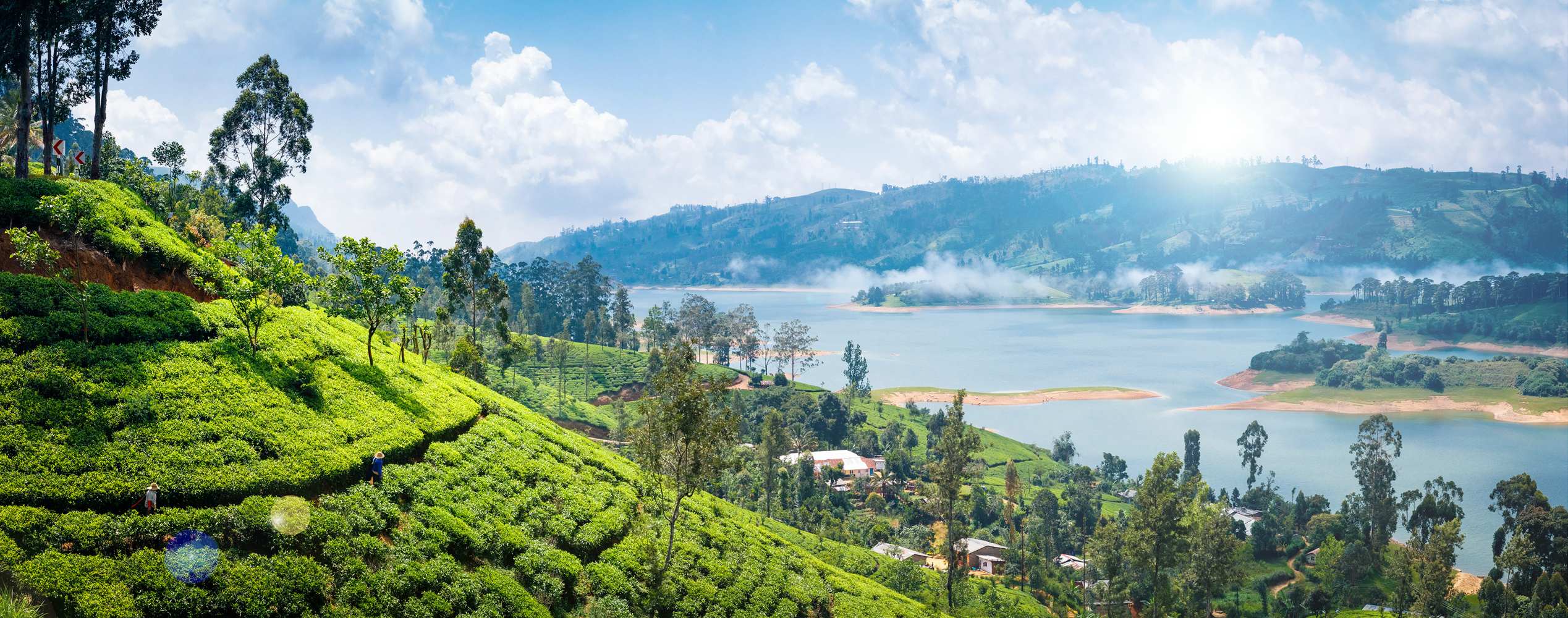
Tea Highlands of Hatton
Tea is often marketed through imagery.
Rolling hills.
Soft mist.
Perfectly arranged cups beside scenic verandas.
But in Sri Lanka’s highlands, the deeper story begins long before any of that.
Around Hatton, one of the most scenic plantations on earth, tea isn’t preserved as nostalgia. It remains a working system — precise and ongoing every single day.
Early mornings begin before the mist fully lifts from the hills. Estate workers move across steep slopes carrying baskets that slowly fill leaf by leaf, motion by motion. Watch closely, and the rhythm becomes almost mathematical: only the top two leaves and a bud are selected, over and over again, with remarkable speed and consistency.
Inside small processing facilities, the atmosphere shifts completely. The air grows warmer. The scent sharpens. Fresh leaves move through stages of withering, rolling, oxidising, and drying — transforming through a process that feels both industrial and deeply sensory at the same time.
And then comes the tasting.
Not simply drinking tea, but understanding it. Comparing batches. Learning how rainfall earlier in the week altered flavour. How elevation changes texture. Why slower-growing leaves create greater complexity in the cup.
Suddenly, tea stops feeling like a product.
It becomes labour, climate, timing, geography, and expertise intertwined.
That’s what makes experiences like this valuable.
They restore visibility to the human systems behind everyday comforts — the people, processes, and environmental conditions travellers might otherwise overlook entirely.
The industry rewarded momentum. More remote access. Faster connections. Tighter itineraries. The ability to push further into landscapes once considered unreachable. And in many ways, that expanded adventure travel in extraordinary ways.
But as travellers become more conscious of the impact tourism leaves behind, the conversation is beginning to shift. Not away from discovery, but towards a deeper awareness of what travel supports in the process. Because every journey interacts with something larger than itself.
A local community.
An ecosystem.
A way of life.
And increasingly, travellers are beginning to ask what their presence gives back in return.
That’s why this month, we explore journeys where adventure becomes part of a wider system of value. From rail routes that reconnect regions more sustainably, to Indigenous-led experiences rooted in cultural continuity, to working tea landscapes that reveal the human craftsmanship behind everyday rituals, these are journeys that leave travellers with more than photographs alone.
They offer a different way of engaging with the world — one that preserves knowledge, strengthens local livelihoods, and creates genuine exchange rather than passive observation.
Let’s take a closer look.
Malaysia Spotlight: The Railway That Connects More Than Cities
7-Day Peninsular Train Surfing
Modern travel often treats transit as interruption — the space between the “real” experiences.
This journey quietly reverses that idea.
Aboard Malaysia’s Electric Train Service (ETS), movement itself becomes part of the story. The route stretches from the urban energy of Singapore through Gemas, Johor Bahru, Kuala Lumpur, and onward to the UNESCO-listed streets of George Town in Penang — connecting vastly different landscapes, communities, and rhythms of life through a single rail line.
And unlike air travel, the transition is visible. Cities loosen gradually into palm-lined countryside. Dense skylines soften into villages, stations, rice fields, and small-town platforms where daily life continues uninterrupted beside the tracks. The country reveals itself not in fragments, but continuously.
There’s also something quietly democratic about rail travel. The same infrastructure used by travellers each day supports local mobility, regional connection, and lower-impact movement across the peninsula. Speed exists here — trains reach up to 160 km/h — but it never feels disconnected from the landscape around it.
And perhaps that’s what makes the experience feel different.
You don’t simply arrive in Malaysia’s destinations.
You witness the space between them.
Inside the train, comfort remains intentional but understated: cushioned seating, generous luggage space, air-conditioning, WiFi, and panoramic windows that gradually turn the journey itself into observation. Time slows just enough for the country to become legible.
Not as highlights pinned to a map. But as a living system moving alongside you.
Rail Insight: Malaysia’s ETS network has become one of Southeast Asia’s most important rail modernisation projects — offering a lower-emission alternative to domestic flights while improving regional connectivity across the peninsula.
7-Day Peninsular Train Surfing
Modern travel often treats transit as interruption — the space between the “real” experiences.
This journey quietly reverses that idea.
Aboard Malaysia’s Electric Train Service (ETS), movement itself becomes part of the story. The route stretches from the urban energy of Singapore through Gemas, Johor Bahru, Kuala Lumpur, and onward to the UNESCO-listed streets of George Town in Penang — connecting vastly different landscapes, communities, and rhythms of life through a single rail line.
And unlike air travel, the transition is visible. Cities loosen gradually into palm-lined countryside. Dense skylines soften into villages, stations, rice fields, and small-town platforms where daily life continues uninterrupted beside the tracks. The country reveals itself not in fragments, but continuously.
There’s also something quietly democratic about rail travel. The same infrastructure used by travellers each day supports local mobility, regional connection, and lower-impact movement across the peninsula. Speed exists here — trains reach up to 160 km/h — but it never feels disconnected from the landscape around it.
And perhaps that’s what makes the experience feel different.
You don’t simply arrive in Malaysia’s destinations.
You witness the space between them.
Inside the train, comfort remains intentional but understated: cushioned seating, generous luggage space, air-conditioning, WiFi, and panoramic windows that gradually turn the journey itself into observation. Time slows just enough for the country to become legible.
Not as highlights pinned to a map. But as a living system moving alongside you.
Rail Insight: Malaysia’s ETS network has become one of Southeast Asia’s most important rail modernisation projects — offering a lower-emission alternative to domestic flights while improving regional connectivity across the peninsula.
Philippines Spotlight: Travel That Begins with Listening
Making Travel Meaningful in Manila & Subic
Many cultural experiences in tourism are designed for observation.
This one asks for participation.
In the forests surrounding Subic Bay and Bataan, travellers are guided by members of the Aeta community — among the Philippines’ oldest Indigenous groups — through landscapes they have known for generations. But what stays with most visitors isn’t simply the trek itself.
It’s the perspective shift that happens along the way.
The forest slowly transforms from scenery into knowledge system. Plants become medicine. Fire becomes technique. Rivers become orientation points. What first appears simple gradually reveals layers of lived expertise shaped through centuries of adaptation and survival.
There is no theatrical staging here.
No polished performance.
Instead, the experience unfolds through conversation, movement, and shared activity: tea prepared over open flame, stories exchanged beside a river pool, cooking demonstrations rooted in zero-waste traditions, bamboo fire-lighting techniques passed between generations.
And somewhere within these moments, the dynamic of travel changes.
The community is no longer treated as a backdrop to the experience.
They become its authors.
Equally important is what the journey supports behind the scenes. Experiences like these create opportunities for Indigenous-led tourism to preserve cultural knowledge while generating sustainable livelihood within communities navigating rapid modern change.
The result feels less like “visiting” a culture — and more like being temporarily welcomed into its worldview.
Later, in Pampanga, the journey continues through another form of heritage entirely: cuisine. At Bale Dutung and Everybody’s Café, recipes become cultural memory preserved through flavour, ritual, and regional identity — reminding travellers that food, too, can carry history forward.
Because meaningful travel doesn’t always come from seeing more. Sometimes, it comes from learning how to pay closer attention.
Making Travel Meaningful in Manila & Subic
Many cultural experiences in tourism are designed for observation.
This one asks for participation.
In the forests surrounding Subic Bay and Bataan, travellers are guided by members of the Aeta community — among the Philippines’ oldest Indigenous groups — through landscapes they have known for generations. But what stays with most visitors isn’t simply the trek itself.
It’s the perspective shift that happens along the way.
The forest slowly transforms from scenery into knowledge system. Plants become medicine. Fire becomes technique. Rivers become orientation points. What first appears simple gradually reveals layers of lived expertise shaped through centuries of adaptation and survival.
There is no theatrical staging here.
No polished performance.
Instead, the experience unfolds through conversation, movement, and shared activity: tea prepared over open flame, stories exchanged beside a river pool, cooking demonstrations rooted in zero-waste traditions, bamboo fire-lighting techniques passed between generations.
And somewhere within these moments, the dynamic of travel changes.
The community is no longer treated as a backdrop to the experience.
They become its authors.
Equally important is what the journey supports behind the scenes. Experiences like these create opportunities for Indigenous-led tourism to preserve cultural knowledge while generating sustainable livelihood within communities navigating rapid modern change.
The result feels less like “visiting” a culture — and more like being temporarily welcomed into its worldview.
Later, in Pampanga, the journey continues through another form of heritage entirely: cuisine. At Bale Dutung and Everybody’s Café, recipes become cultural memory preserved through flavour, ritual, and regional identity — reminding travellers that food, too, can carry history forward.
Because meaningful travel doesn’t always come from seeing more. Sometimes, it comes from learning how to pay closer attention.
Cultural Insight: The Aeta are considered among the earliest known inhabitants of the Philippines — with traditions deeply connected to forest knowledge, oral storytelling, and sustainable living practices that continue today.
Sri Lanka Spotlight: The Labour Behind the Landscape
Tea Highlands of Hatton
Tea is often marketed through imagery.
Rolling hills.
Soft mist.
Perfectly arranged cups beside scenic verandas.
But in Sri Lanka’s highlands, the deeper story begins long before any of that.
Around Hatton, one of the most scenic plantations on earth, tea isn’t preserved as nostalgia. It remains a working system — precise and ongoing every single day.
Early mornings begin before the mist fully lifts from the hills. Estate workers move across steep slopes carrying baskets that slowly fill leaf by leaf, motion by motion. Watch closely, and the rhythm becomes almost mathematical: only the top two leaves and a bud are selected, over and over again, with remarkable speed and consistency.
Inside small processing facilities, the atmosphere shifts completely. The air grows warmer. The scent sharpens. Fresh leaves move through stages of withering, rolling, oxidising, and drying — transforming through a process that feels both industrial and deeply sensory at the same time.
And then comes the tasting.
Not simply drinking tea, but understanding it. Comparing batches. Learning how rainfall earlier in the week altered flavour. How elevation changes texture. Why slower-growing leaves create greater complexity in the cup.
Suddenly, tea stops feeling like a product.
It becomes labour, climate, timing, geography, and expertise intertwined.
That’s what makes experiences like this valuable.
They restore visibility to the human systems behind everyday comforts — the people, processes, and environmental conditions travellers might otherwise overlook entirely.
And in doing so, they create a deeper form of appreciation:
not just for the final product,
but for everything required to produce it.
Leaf Logic: In Sri Lanka’s high-grown tea estates, cooler temperatures slow leaf growth naturally — allowing flavour compounds to develop more gradually and creating the brighter, more complex taste profiles the region is known for.
Why This Matters
Because today, adventure shapes more than memories.
It shapes economies.
Cultural continuity.
Environmental awareness.
Opportunity.
And increasingly, travellers are recognising that where they choose to go — and how they choose to experience it — carries weight beyond the itinerary itself.
Journeys centred around local knowledge, slower infrastructure, cultural participation, and community-led experiences don’t just create richer travel. They help sustain the very things that make destinations meaningful in the first place.
Because ultimately, the most rewarding journeys aren’t always the ones that take the most. They’re the ones that leave something worthwhile behind.
Looking to create journeys that connect travellers more meaningfully with people, culture, and place? Connect with Mr. David Carlaw at david.carlaw@dth.travel or discover more at DTH.Travel.
not just for the final product,
but for everything required to produce it.
Leaf Logic: In Sri Lanka’s high-grown tea estates, cooler temperatures slow leaf growth naturally — allowing flavour compounds to develop more gradually and creating the brighter, more complex taste profiles the region is known for.
Why This Matters
Because today, adventure shapes more than memories.
It shapes economies.
Cultural continuity.
Environmental awareness.
Opportunity.
And increasingly, travellers are recognising that where they choose to go — and how they choose to experience it — carries weight beyond the itinerary itself.
Journeys centred around local knowledge, slower infrastructure, cultural participation, and community-led experiences don’t just create richer travel. They help sustain the very things that make destinations meaningful in the first place.
Because ultimately, the most rewarding journeys aren’t always the ones that take the most. They’re the ones that leave something worthwhile behind.
Looking to create journeys that connect travellers more meaningfully with people, culture, and place? Connect with Mr. David Carlaw at david.carlaw@dth.travel or discover more at DTH.Travel.