
Life's Plot Twist: It's in the Wildlife
01-Apr-2026
Category: News Stories
Wildlife travel usually comes with a script.
You go somewhere remote.
You wait patiently.
Something moves. Everyone gasps.
Cue: “Did you see that?”
But every now and then, nature decides to rewrite the storyline entirely.
Because sometimes, the most memorable encounters aren’t about spotting wildlife where it’s supposed to be… but discovering it where it absolutely shouldn’t be — or at least, where you didn’t expect it.
This month, we follow those plot twists. The kind where ecosystems reinvent themselves, where darkness reveals more than daylight, and where familiar landscapes turn out to be something else entirely.
Let’s take a closer look.
Philippine Spotlight: Life Beneath the Lost
Loss, as it turns out, can be surprisingly full of life.
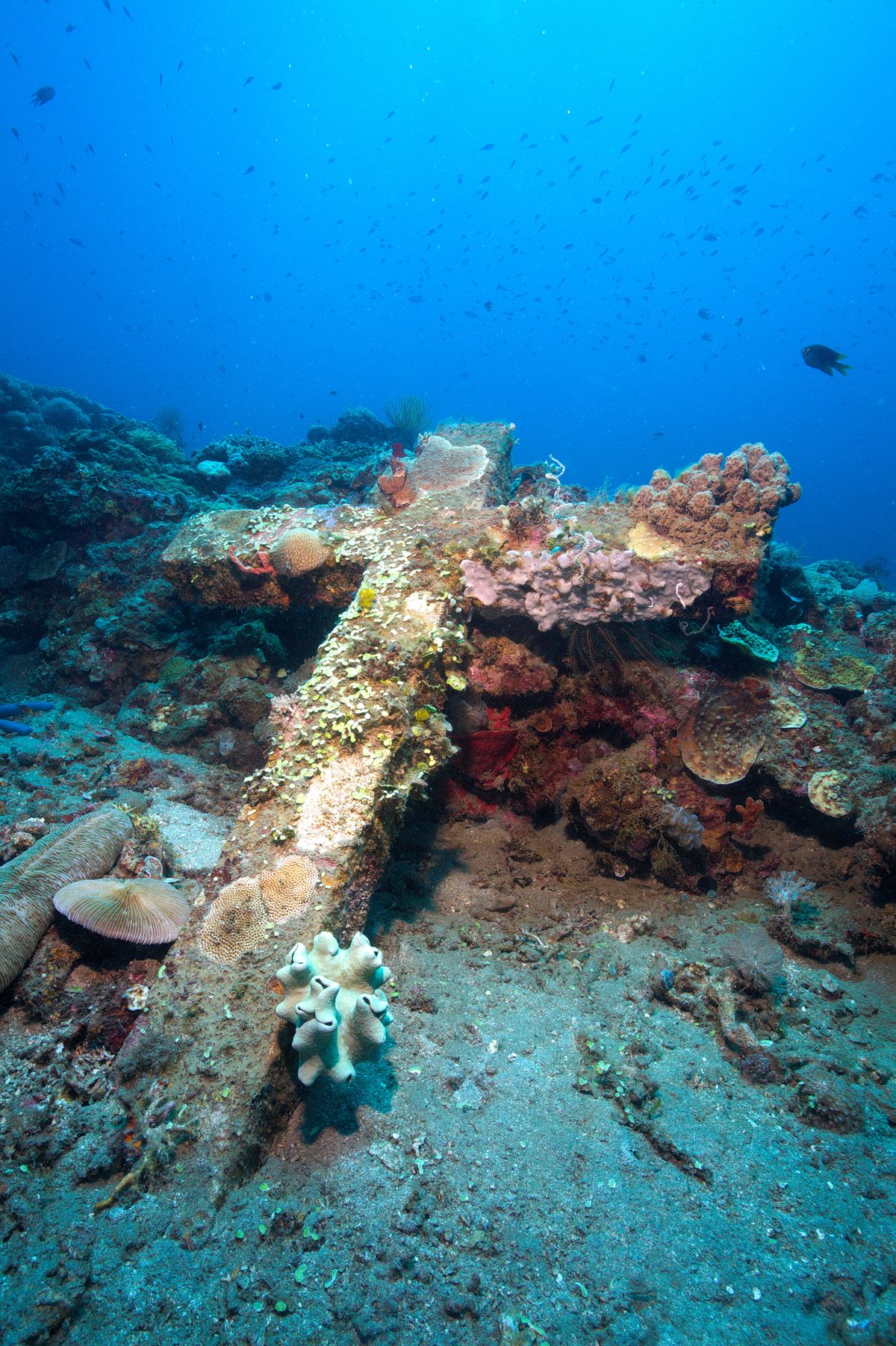
Off the coast of Camiguin lies the Camiguin Sunken Cemetery — a site that, in the 1870s, slowly disappeared beneath the sea following a volcanic eruption.
What could have remained a quiet relic of the past has instead transformed into something quite extraordinary. Beneath the surface, coral gardens now flourish where gravestones once stood. Fish weave through the remnants, and marine life has claimed the space as its own.
It’s not a spectacle in the traditional sense. There are no grand reveals, no dramatic entrances. Just a steady, almost poetic reminder that nature doesn’t erase — it adapts.
And for those who explore it, the experience feels less like visiting a site, and more like witnessing a story that refused to end.
Nature Insight: Sometimes, the most powerful ecosystems are built on what was left behind.
Malaysia Spotlight: When Darkness Reveals More
Daytime gets all the credit.
But in Danum Valley, it’s the night shift that does the real work.
As the sun sets, the rainforest doesn’t go quiet — it switches gears. The familiar fades, and something far more dynamic takes over.
On a night safari, the rules of wildlife watching are completely rewritten. You don’t scan wide landscapes; you focus on flickers. A pair of glowing eyes. A rustle that wasn’t there a second ago. Movements that feel almost imagined—until they aren’t.
Nocturnal species emerge, unseen during the day, turning the forest into a different world altogether. It’s less “spot the animal,” more “realise how much you weren’t seeing before.”
And somewhere between adjusting your vision and second-guessing every shadow, it clicks: the rainforest was never quiet. You were just exploring at the wrong time.
Wildlife Insight: Seeing more sometimes begins with seeing differently.
Vietnam Spotlight: The Bay That Isn’t a Bay
Some places are introduced with a comparison.
“This looks like that.”
You go somewhere remote.
You wait patiently.
Something moves. Everyone gasps.
Cue: “Did you see that?”
But every now and then, nature decides to rewrite the storyline entirely.
Because sometimes, the most memorable encounters aren’t about spotting wildlife where it’s supposed to be… but discovering it where it absolutely shouldn’t be — or at least, where you didn’t expect it.
This month, we follow those plot twists. The kind where ecosystems reinvent themselves, where darkness reveals more than daylight, and where familiar landscapes turn out to be something else entirely.
Let’s take a closer look.
Philippine Spotlight: Life Beneath the Lost
Loss, as it turns out, can be surprisingly full of life.
Off the coast of Camiguin lies the Camiguin Sunken Cemetery — a site that, in the 1870s, slowly disappeared beneath the sea following a volcanic eruption.
What could have remained a quiet relic of the past has instead transformed into something quite extraordinary. Beneath the surface, coral gardens now flourish where gravestones once stood. Fish weave through the remnants, and marine life has claimed the space as its own.
It’s not a spectacle in the traditional sense. There are no grand reveals, no dramatic entrances. Just a steady, almost poetic reminder that nature doesn’t erase — it adapts.
And for those who explore it, the experience feels less like visiting a site, and more like witnessing a story that refused to end.
Nature Insight: Sometimes, the most powerful ecosystems are built on what was left behind.
Malaysia Spotlight: When Darkness Reveals More
Daytime gets all the credit.
But in Danum Valley, it’s the night shift that does the real work.
As the sun sets, the rainforest doesn’t go quiet — it switches gears. The familiar fades, and something far more dynamic takes over.
On a night safari, the rules of wildlife watching are completely rewritten. You don’t scan wide landscapes; you focus on flickers. A pair of glowing eyes. A rustle that wasn’t there a second ago. Movements that feel almost imagined—until they aren’t.
Nocturnal species emerge, unseen during the day, turning the forest into a different world altogether. It’s less “spot the animal,” more “realise how much you weren’t seeing before.”
And somewhere between adjusting your vision and second-guessing every shadow, it clicks: the rainforest was never quiet. You were just exploring at the wrong time.
Wildlife Insight: Seeing more sometimes begins with seeing differently.
Vietnam Spotlight: The Bay That Isn’t a Bay
Some places are introduced with a comparison.
“This looks like that.”
“It’s basically a version of…”
Enter Ninh Binh — often called “Ha Long Bay on land.”
Which is helpful. And also wildly insufficient.
Because while the limestone karsts may feel familiar, everything else tells a different story. Rivers wind through rice fields instead of open sea. Boats glide past towering formations — not across waves, but through quiet inland waterways.
Beyond the postcard views lies a deeper layer: protected ecosystems like Cuc Phuong National Park, Vietnam’s first national park and a sanctuary for biodiversity. Here, ancient forests stretch beyond sight, primates like the critically endangered Delacour’s langur leap between trees, and rare plants thrive in shaded valleys. The park is a living testament to conservation — breeding programs, eco-education, and careful preservation allow nature to flourish while humans learn to coexist with it.
It’s a place that challenges easy labels. Not quite this, not quite that — and far more interesting because of it.
Perspective Insight: The moment you stop comparing is the moment a place reveals what it truly is.
Why These Stories Matter
Wildlife doesn’t always follow expectations.
It grows where it can.
It adapts when it must.
It reveals itself differently depending on how — and when — you choose to look.
From underwater cemeteries turned coral sanctuaries, to rainforests that come alive in darkness, to landscapes that defy their own comparisons, these journeys remind us of one thing: Nature is rarely what we assume it to be.
And perhaps that’s the point.
Because the real magic isn’t just in seeing wildlife. It’s in realizing how much more there is to see — once you let go of the script.
Want to design itineraries around wildlife journeys — with a twist — across
Enter Ninh Binh — often called “Ha Long Bay on land.”
Which is helpful. And also wildly insufficient.
Because while the limestone karsts may feel familiar, everything else tells a different story. Rivers wind through rice fields instead of open sea. Boats glide past towering formations — not across waves, but through quiet inland waterways.
Beyond the postcard views lies a deeper layer: protected ecosystems like Cuc Phuong National Park, Vietnam’s first national park and a sanctuary for biodiversity. Here, ancient forests stretch beyond sight, primates like the critically endangered Delacour’s langur leap between trees, and rare plants thrive in shaded valleys. The park is a living testament to conservation — breeding programs, eco-education, and careful preservation allow nature to flourish while humans learn to coexist with it.
It’s a place that challenges easy labels. Not quite this, not quite that — and far more interesting because of it.
Perspective Insight: The moment you stop comparing is the moment a place reveals what it truly is.
Why These Stories Matter
Wildlife doesn’t always follow expectations.
It grows where it can.
It adapts when it must.
It reveals itself differently depending on how — and when — you choose to look.
From underwater cemeteries turned coral sanctuaries, to rainforests that come alive in darkness, to landscapes that defy their own comparisons, these journeys remind us of one thing: Nature is rarely what we assume it to be.
And perhaps that’s the point.
Because the real magic isn’t just in seeing wildlife. It’s in realizing how much more there is to see — once you let go of the script.
Want to design itineraries around wildlife journeys — with a twist — across
Asia? reach out to Mr. David Carlaw at david.carlaw@dth.travel or explore more at www.dth.travel