
Luxury, Reconsidered: When Presence Becomes the Ultimate Indulgence (Not Excess)
02-Mar-2026
Category: News Stories
Luxury travel has long been defined by what you can see: overwater villas, white-gloved service, rare vintages, and architectural spectacle. Silk bed sheets. Monogrammed pillows. Michelin-starred degustation. Chauffeurs who appear on cue. It has been this way for decades — even centuries.
Heritage Insight: True exclusivity is not isolation — it is proximity. To craft, to memory, to daily life unfolding without performance.
But perhaps those are no longer the pinnacle — perhaps they are simply the baseline.
In a digital world of constant notifications, infinite scrolling, and itineraries designed to impress followers more than to immerse, we’ve come to realise that maybe, the rarest commodity is not excess. It is presence.
The ability to linger in a village conversation.
To sit in silence without reaching for a screen.
To allow a landscape — or a ritual — to unfold without rushing it.
This month, we explore journeys that balance coziness as described by classic luxury with its quiet redefinition. Destinations where comfort is assured — but what lingers is something deeper: attention, stillness, and connection.
For Those Who Think They Already Know the Maldives: The Southern & Northern Atolls, Rewritten
The Maldives has become shorthand for overwater villas and turquoise perfection. And yes, those exist. Beautifully. But beyond the polished resorts lies a country with layered history, lived culture, and communities whose stories rarely make the brochure.
Welcome to the southern atolls of the Maldives where luxury isn’t spectacle — it’s the rare chance to experience culture and traditions that have endured for centuries. A chance to witness a nation beyond its postcard.
On Fuvamulah, lagoons and wetlands reshape expectations of what a Maldivian island looks like. Tiger shark diving for the bold. Lagoon snorkelling for the contemplative. A 400-year-old mosque standing calmly beside a lake, as if time were never in a hurry.
In Gaafu, mat weaving, lacquerwork, and sunset fishing with locals reveal something subtle but powerful: heritage here isn’t curated for explorers. It is simply lived.
Further north, the Maldives shifts tone again.
In Utheemu, the palace of Sultan Mohamed Thakurufaanu stands as a quiet reminder of resistance and strategy — history not as drama, but as endurance. Old mosques and cemeteries tell stories of faith layered gently over centuries.
In villages across Haa Alifu and Shaviyani, boatbuilders shape wood the way their grandfathers did. Weavers move with patient rhythm. Tea houses hum with unfiltered conversation.
There is no rush here. No crowds, no fanfare, no ticking clock — only stories, textures, and traditions so quietly extraordinary they redefine what luxury can be.
Heritage Insight: True exclusivity is not isolation — it is proximity. To craft, to memory, to daily life unfolding without performance.
For Those Seeking the Luxury of Stillness: Depth Across Bhutan
Bhutan offers something few destinations can promise: space to recalibrate.
When you travel to the East, away from the familiar viewpoints of Western Bhutan, something shifts.
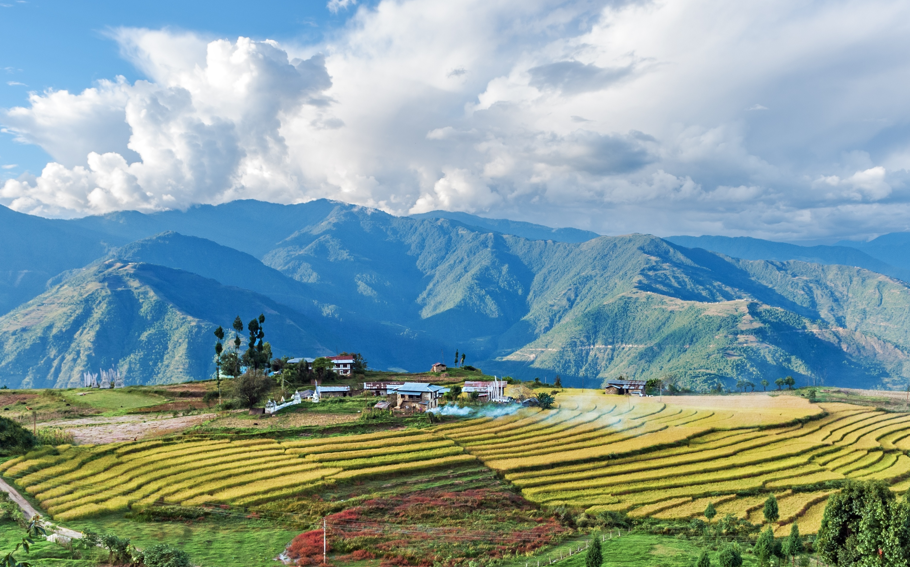
Mobile signal fades. Schedules soften. Pine forests swallow the noise of the outside world. Hidden sacred temples sit quietly among villages — not as monuments, but as neighbours.
Long drives here are not logistical inconveniences — they are transitions. Time to observe how geography shapes patience, how devotion blends into daily routine, how a roadside tea stop becomes the most remembered moment of the day.
In Khoma, Mongar, and Lhuentse, weaving is not an “experience” — it is an inheritance. Travellers meet women whose looms sit at the centre of family life, producing Kishuthara, Bhutan’s most intricate and prestigious textile. These are not patterns chosen to match décor. They are coded histories. Some motifs signal protection. Others indicate region, occasion, or lineage. A few are traditionally worn only once in a lifetime — often after months of work and years of saving.
You don’t just buy Kishuthara. You earn the right to understand why it matters.
At Gom Kora and Chorten Kora, spirituality is lived — not displayed. Locals still walk clockwise around the sacred rock and temple — not to rack up merit points, but as part of the centuries-old kora, honouring Guru Rinpoche’s meditation here. Each step flows with devotion, purification, and a sort of spiritual cardio that leaves one quietly in awe. Think of it as walking meditation with a view — and rather more impressive than your morning treadmill.
In Bumthang’s temples, monks chant while villagers pass through mid-errand. Cows wander, unbothered. Rituals begin when they begin. If a ceremony unfolds during your visit, you are welcome to observe — quietly, respectfully, and without anyone stopping to explain what is happening. Understanding, after all, is not always immediate.
There are no velvet ropes. No curated explanations on demand.
Pause & Consider: In Bhutan, distance is intentional. The journey is structured to slow you down — to pause and observe — not because it must, but because it should.
For Those Ready to Trade Skyline for Sky: Inner Mongolia, Unfiltered
Beyond the urban energy of Shanghai and Beijing lies another China entirely. In Inner Mongolia, the landscape does not compete for attention. It absorbs it.
Travellers are welcomed into herder family homes not as observers, but as welcomed friends. They’ll learn how fresh dairy products are made, eat traditional cuisines, try traditional archery, and hear stories that have travelled orally from one generation to the next.
There’s laughter. There’s language clumsiness as you try to speak Mongolian. But there’s the universal language of shared meals and stories. And often, there’s a moment of realisation: this is what cultural exchange is supposed to feel like.
Overnight stays in traditional gers — circular felt homes perfected for nomadic life — reshape the definition of comfort. As night falls, stories are shared around a campfire. The stars appear — then multiply — until the sky feels crowded with light. There’s no Wi-Fi, no notifications, and no need for either. Just the crackle of firewood, the hum of the wind, and the rare luxury of true quiet.
Sleep comes easily here. The kind that feels earned.
The journey culminates at the Resonant Sand Gorge in Ordos, where dunes hum and sing beneath your feet (literally). Camel trekking, sandboarding, and wide-eyed disbelief follow — because few expect deserts to feel this alive.
It’s a striking contrast that stays with travellers long after they leave.
Cultural Insight: In nomadic tradition, refusing tea is more shocking than arriving unannounced. Generosity is not an offering — it is a given.
Why These Journeys Matter
Because luxury is evolving. Today’s discerning travellers no longer seek only what dazzles — they seek what anchors.
They value seamless logistics and beautiful properties, yes. But they also crave immersion without intrusion. Space without spectacle.
Presence without excess.
Whether cycling through southern Maldivian villages, driving east across Bhutan’s pine-scented mountains, or sleeping beneath Mongolian skies, these journeys share one common thread:
They reward those who are willing to slow down.
For transformative, insight-led journeys that redefines luxury across Asia, connect with Mr. David Carlaw at david.carlaw@dth.travel or discover more at www.dth.travel.