
Responsibly Remote: When Sustainable Travel Goes Further (DTH Travel)
03-Feb-2026
Cultural Insight: Mongigol Tobilung dances reflect the community’s bond with nature — movements echoing birds in flight and the rhythms of the sea.
Category: News Stories
Sustainability has often been characterised by travelling small to minimise impact, and carbon footprint. But we see things quite differently — for us, sustainable travel is a matter of intention and accountability – not mileage.
Reaching the edges of the map can be done thoughtfully, ethically, and with extraordinary depth.
From eastern Bhutan’s weaving valleys to China’s vast northern grasslands, and deep into Sabah’s highlands and coastlines, these journeys go far — geographically and culturally — while delivering something far more rare: meaningful exchange, long-term community value, and travel that leaves places stronger than it found them.
This is responsible travel that doesn’t shrink ambition. It raises the standard.
Bhutan — Threads That Carry History, Identity, and Survival
Where Textiles Are Not Souvenirs — They Are Status, Story, and Legacy
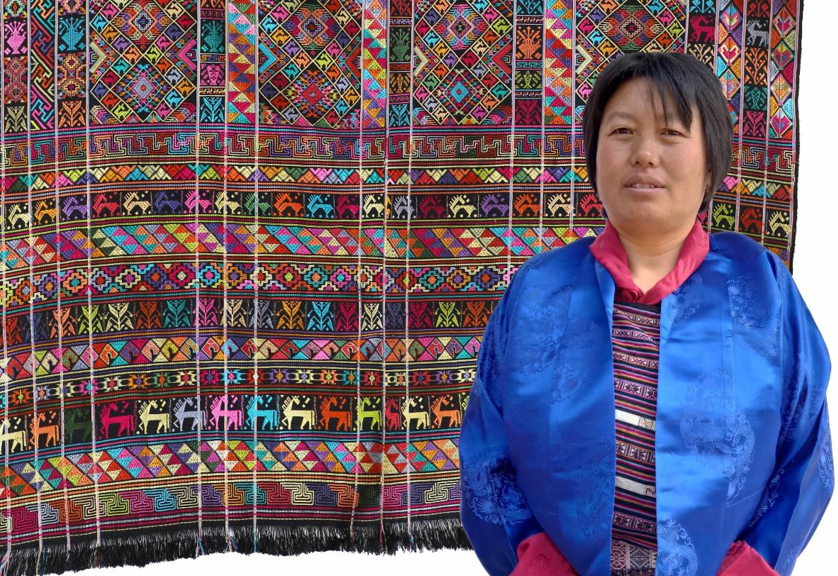
“Eastern Bhutan lies far beyond the familiar circuits of Paro, Thimphu, and Punakha. Here, the valleys of Khoma, Mongar, and Lhuentse unfold slowly — and deliberately — into a world where weaving is not a cultural ‘experience’. It is an inheritance,” shares Ugyen Dorji, Bhutan General Manager.
In these villages, Kishuthara — Bhutan’s most intricate and prestigious textile — is not decorative. It is declarative.
Each pattern is a coded language:
• Some motifs offer spiritual protection
• Others signal lineage, region, or life stage
• Certain designs are traditionally worn only once in a lifetime
These are not fabrics chosen to match interiors. They are woven histories — and often among the most valuable possessions a family owns.
Travellers don’t simply shop for textiles. They are invited into weaving homes and papermaking workshops where they learn why these crafts endure: not because they are merely preserved, but because they remain economically and culturally essential.
Here, patience is not a virtue. It is survival. When a single textile takes months to complete, time itself becomes part of the value.
Eastern Bhutan teaches travellers that heritage isn’t something you look at. It’s something people live by, depend on, and protect — one thread at a time.
Familial Fact: In eastern Bhutan, a textile may be the most valuable item a family owns — and often the last thing they would ever consider selling.
China — Inner Mongolia: Wide Horizons, Deep Exchange
Where Remoteness Creates Space for Real Connection
Inner Mongolia does not rush you. It slows you — gently, persistently, and with purpose.
As shared by China Managing Director Fan Zhang, “From the moment travellers arrive, the grasslands of Hulunbuir or Xilingol stretch endlessly, skies widen, and the horizon refuses to be captured by photos. This is not a quick cultural stop. This is a recalibration.”
Explorers stay overnight in traditional gers — circular felt tents used by nomadic families for centuries. As night falls, stories replace screens. Stars multiply. Silence becomes a luxury. Sleep feels earned.
The most powerful moments happen inside local homes. Travellers are welcomed into herder families’ daily lives — learning to make fresh dairy, trying traditional archery, sharing meals, and navigating language gaps with laughter and generosity. It’s not staged. It’s shared.
Just when travellers think they understand the landscape, it shifts again. The grasslands give way to the Resonant Sand Gorge in Ordos — where dunes hum beneath your feet, deserts feel alive, and camel trekking and sandboarding offer a reminder: remoteness is not monotony. It is variety on a grand scale.
What makes this journey meaningful isn’t just the remoteness — it’s the relationships. When you slow down enough to share meals, stories, and daily life, that’s when travel becomes genuine exchange.
Perspective Shift: In Inner Mongolia, responsibility looks like pacing, presence, and partnership — not performance.
Malaysia (Sabah) — Living With the Land, Living With the Sea
Two Community Journeys That Redefine What ‘Remote’ Really Means
Renée Osman, our Malaysia General Manager, shares a different side of the country away from the peninsula — quite literally to the east, “Sabah’s remoteness is not isolation. It is intimacy — with people, with land, and with ways of life that still function on trust, tradition, and shared responsibility.”
Uphill Dusun Experience:
Talantang Village welcomes travellers with a Dusun ritual led by the village leader — a gesture of unity that feels heartfelt, musical, and just serious enough to remind you this isn’t a performance.
Breakfast is served 700 meters above sea level with Mount Kinabalu as your backdrop. Travellers learn to prepare Linangatan — rice wrapped in leaves and carried to the fields by farmers for generations. Suddenly, boxed lunches feel deeply inadequate.
The day unfolds with pineapple harvesting, rubber tapping, and demonstrations of the Kasip trap — a centuries-old crop protection method that proves innovation often predates technology.
Lunch is a Dusun feast cooked in bamboo over open fire — smoky, rich, and unapologetically generous. The day ends with a hilltop dinner under the stars and sleep in cosy glamping huts, serenaded by insects and mountain air.
Local Insight: Rubber tapping here follows nature’s pace — early mornings, careful cuts, and a deep respect for working with the land.
Taburan Experience:
Taburan Beach greets travellers with smiles, tropical drinks, and one immediate realisation: signal is optional. Presence is not.
The first day blends home-cooked meals, bead-making workshops, and sunset cooking sessions. Evenings bring Dusun Tobilung performances — dances inspired by eagles, tides, and coastal life — followed by BBQs under the stars.
The day shifts into mangroves and muddy feet. A gentle river cruise reveals mangroves as coastal heroes: nurseries, filters, and storm barriers all at once. Then comes clam hunting — where patience, timing, and careful observation turn dinner into a lesson in ecosystem balance.
Afternoons are deliberately unstructured: kayak, swim, nap, repeat. Because responsible travel also means allowing communities to set the rhythm.
By the final morning, travellers understand: coastal life here isn’t about escape. It’s about stewardship.
Cultural Insight: Mongigol Tobilung dances reflect the community’s bond with nature — movements echoing birds in flight and the rhythms of the sea.
Why Responsibly Remote Matters
Because sustainability is not about shrinking the map. It’s about designing journeys that:
• Respect pace
• Value people over performance
• Turn remoteness into relationship
• And leave communities stronger, not spotlighted
These journeys prove that responsibility doesn’t mean thinking smaller.
It means travelling smarter, deeper, and with care — even to the farthest edges.
For responsibly designed, remote, and community-led journeys across Asia, contact Mr. David Carlaw at david.carlaw@dth.travel or discover more at www.dth.travel.