
Local travel experiences in Okinawa, Japan
03-Dec-2025
Category: News Stories
Okinawa is brimming with cultural diversity, and visitors to this subtropical part of Japan can enjoy hands on experience with the prefecture’s local traditions.
What’s more, why not join us on your coffee break on Friday 12th December at 10am to hear how you can include some local experiences in your recommendations to your clients. Register here to attend this FREE webinar.
Here are some traditional must-try activities:
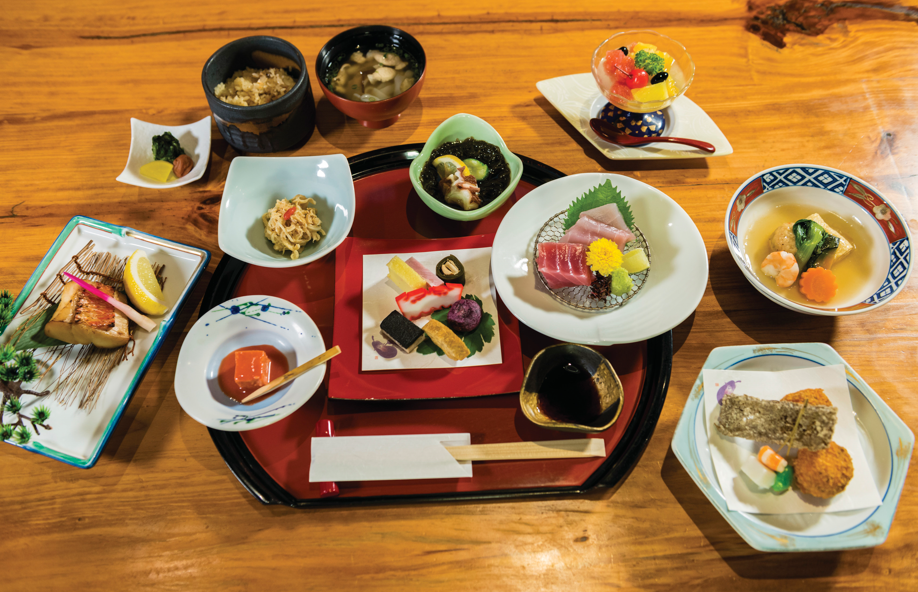
Feast on Ryukyu cuisine
The roots of modern Okinawan food culture stretch back centuries to the Ryukyu Kingdom and was influenced by China, Korea, Japan and parts of South East Asia. Ryukyu cuisine can be divided into two broad categories; the food enjoyed by the court, and food enjoyed by common people. In Okinawa, food is referred to as kusuimun and nuchigusui, meaning something like “medicine” or “medicine for life.” Okinawa is also one of the world’s Blue Zones, where there are many centenarians. Here is a recommendation where you can enjoy food from the Ryukyu dynasty in Naha, here.
Learn to play the sanshin
With a history believed to date back about 600 years, the sanshin is a traditional instrument ingrained in the history and culture of the Ryukyu Islands. Currently, the sanshin is played in a wide variety of music genres, including classical Ryukyu music, Ryukyu opera, folk songs, performing folk arts, and pop music. Learn and enjoy a free experience of playing the sanshin at the Native Okinawan Village.
Ryukyu bingata dyeing and create natural patterns with coral dyeing
Believed to originate between the 14th and 15th centuries, bingata is a collective term for Okinawan dyeing that emerged in the rich natural climate of the islands, and has been nurtured through unique techniques. Under the protection of the Ryukyu Royal Government, bingata textiles were used for ceremonial costumes and dresses of the Ryukyu royalty, warriors, and women.
Shuri Ryusen, a business located in Shuri, in Naha City, is well known for their use of coral dyeing, which evolved independently from the traditional techniques of bingata. Founded in 1973, Ryusen opened the first dyeing plant and laboratory in Okinawa. Its aim is the “revival of bingata and development and transmission of dyeing technologies.” It is also the only place where you can experience coral dyeing. You can combine designs from coral fossils of various sizes and dye clothes using a tool called a tampo with various dyeing liquids, arranging coral patterns to create completely original designs. Check out Shuri Ryusen for experiences.
For more information on local experiences, contact Sandra at sandra@humewhitehead.co.uk